Yoga for Better Sleep: A Calming Bedtime Routine
Yoga Energized is reader-supported. When you buy through links on our site, we may earn an affiliate commission at no extra cost to you. As an Amazon Associate, we earn from qualifying purchases.
If you lie down at night with a busy mind and a restless body, yoga for better sleep can help you shift out of “doing” mode and into deep rest. This gentle, follow-along routine is for beginners and intermediate home practitioners who want a calming way to wind down, whether you do it on a mat or right in bed. No experience needed, no sweat, no strain.
Why gentle yoga helps you sleep
Sleep is hard to force. It arrives most easily when your nervous system feels safe and quiet. Fast-paced flows energize you, but slow, restorative yoga does the opposite. By holding soft, supported shapes and letting your muscles release, you send your body a steady signal that the day is over and it is time to rest.
The real magic is in the breathing. When you lengthen your exhale and slow your breath, you gently nudge your body toward its “rest and digest” state. Your heart rate eases, your shoulders drop, and the mental chatter starts to settle. Pair that slow breath with gentle poses and you create the ideal conditions for sleep to come on its own.
Keep this practice truly gentle. The goal is not a workout or a deep stretch, but a feeling of letting go. If a pose ever feels sharp or effortful, ease off. Drowsiness during the routine is not a sign you are doing it wrong. It is exactly the point. If racing thoughts tend to keep you up, you may also find our guide to yoga for stress helpful alongside this bedtime routine.
Set the scene for rest
A few small touches make this practice far more effective:
- Dim the lights an hour before bed and put screens away. Bright light tells your brain to stay awake.
- Keep the room cool, quiet, and tidy enough to lie down comfortably.
- Have props within reach. A yoga bolster or a firm pillow, a folded blanket, and an eye pillow add support and comfort. You can also browse props at Gaiam. None of this is required, though. Pillows and blankets you already own work beautifully.
- Wear loose, warm clothing so you never feel the urge to adjust yourself mid-pose.
Move slowly through the sequence below, resting a few breaths between poses. There is no rush and no finish line.
A calming breath to begin
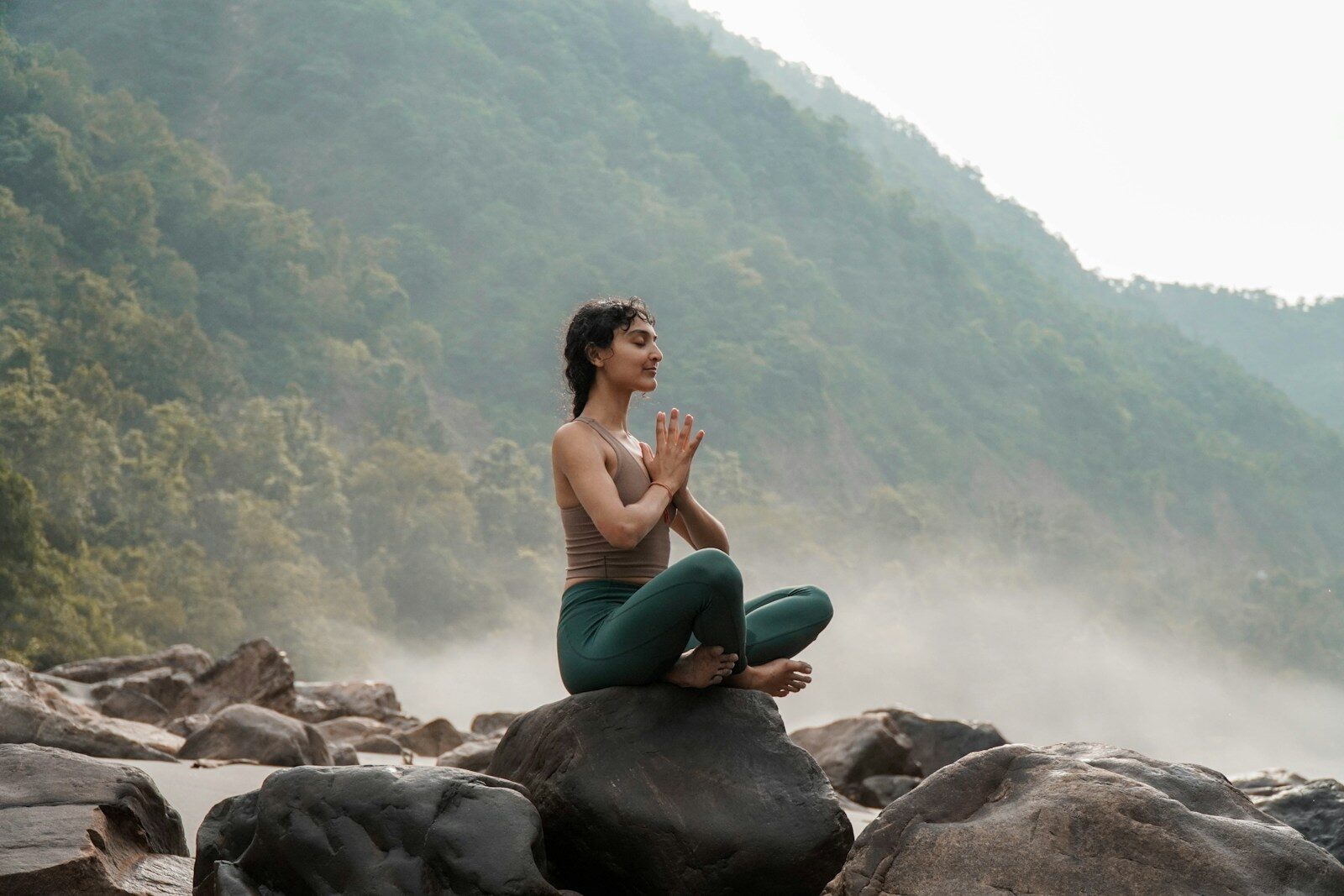
Before the poses, settle in with a simple extended-exhale breath. This technique, sometimes called a 4-6 breath, calms the body quickly and you can return to it anytime your mind wanders.
- Sit or lie down comfortably and let your eyes close.
- Breathe in gently through your nose for a count of four.
- Breathe out slowly through your nose or softly parted lips for a count of six.
- Keep the breath smooth and quiet, never strained. Repeat for five to ten rounds.
Notice how the longer exhale invites your whole body to soften. Carry this slow, easy rhythm with you into the poses.
The bedtime sequence
Here is your follow-along routine of seven gentle poses. Move in order, hold each one for the suggested breaths or longer if it feels good, and let every exhale deepen your sense of release. New to yoga entirely? Our complete beginner’s guide walks you through the basics first.
1. Gentle seated forward fold
Sit with your legs extended, knees softly bent, a pillow or bolster resting on your thighs. Inhale to lengthen your spine, then exhale as you fold forward, letting your chest and head rest on the support. Let your back round naturally and your arms go heavy.
Breath cue: With each long exhale, imagine the day’s tension draining out through your fingertips. Hold for 8 to 10 slow breaths.
2. Reclined butterfly (Supta Baddha Konasana)
Lie back, bring the soles of your feet together, and let your knees fall open. Slide a pillow under each knee so your inner thighs feel fully supported. Rest your hands on your belly or by your sides, palms up.
Breath cue: Feel your belly rise and fall under your hands, softening your hips a little more with every breath out. Stay for 1 to 2 minutes.
3. Supine twist
Lying on your back, hug both knees in, then let them drop gently to the right as you turn your head to the left. Keep both shoulders heavy on the floor or bed. Rest your knees on a pillow so you never have to hold them up.
Breath cue: Breathe into any gentle stretch along your spine, and exhale to settle deeper. Hold for 6 to 8 breaths, then switch sides.
4. Legs-up-the-Wall (Viparita Karani)
Scoot your hips close to a wall or your headboard and swing your legs up so they rest vertically. If that is not handy, prop your calves on a chair, a stack of pillows, or your bolster. Let your arms rest open and your whole back body relax.
Breath cue: This quietly soothing pose is wonderful for tired legs. Breathe slowly and evenly, staying for 2 to 5 minutes as your body grows calm and heavy.
5. Child’s Pose (Balasana)
Come to your knees, bring your big toes together, and widen your knees around a bolster or pillow. Fold forward and rest your torso and one cheek on the support, arms draped alongside. Turn your head halfway through.
Breath cue: Feel the back of your ribs expand on each inhale and your forehead grow heavier on each exhale. Rest for 1 to 2 minutes.
6. Happy Baby (Ananda Balasana)
Lie on your back, draw your knees toward your chest, and hold the outsides of your feet or your shins. Let your knees drift toward the floor beside your ribs. Keep it light and playful, gently rocking side to side if that feels nice.
Breath cue: Breathe into your lower back and hips, releasing a little more on each exhale. Stay for 6 to 8 breaths, then slowly release your feet to the floor.
7. Corpse Pose with breathing (Savasana)
Lie flat with your legs long and slightly apart, arms resting a few inches from your sides, palms up. Tuck a pillow under your knees and lay an eye pillow over your eyes if you have one. Let your whole body feel supported and still.
Breath cue: Return to your slow 4-6 breath, then let the counting fall away and allow your breath to become natural. Soften your jaw, your eyes, your hands. Rest here for 5 minutes or longer, and if you are in bed, simply let yourself drift off.
Want to build more confidence with these shapes? Our roundup of gentle foundational poses breaks down the basics one at a time.
Tips for a better evening wind-down
Yoga works best as part of a calming routine rather than a quick fix. A few habits that help the practice sink in:
- Keep a steady bedtime. Going to sleep and waking around the same times trains your body to feel sleepy on schedule.
- Ease off caffeine and heavy meals in the hours before bed so your body is not busy digesting or wired.
- Do the same short sequence each night. Repetition turns the routine into a cue your brain learns to associate with sleep.
- Let go of effort. If you fall asleep mid-pose, that is a success, not a failure.
- Park your worries. Jotting tomorrow’s to-dos on paper before you start can quiet a racing mind.
A gentle note on when to seek help
This article is general wellness information, not medical advice. Gentle yoga and slow breathing are a lovely way to support restful nights, but they are not a treatment for sleep disorders. If you regularly struggle to fall or stay asleep, feel exhausted during the day, or your sleep troubles persist for more than a few weeks, please talk with your doctor. Persistent insomnia has many possible causes, and a professional can help you find the right path.
For tonight, though, give yourself permission to slow down. Dim the lights, roll out your mat or settle into bed, and let these calming poses carry you gently toward sleep.